POSTER, ICNMTA2014, 14th INTERNATIONAL CONFERENCE
- I. Tissota, L. Alvesb, M.L. Carvalhoc, V. Corregidorb, M. Mansoc, M. Tissota,d, M.F. Guerrae. 2014. Searching for Late Bronze Age soldering techniques: µPIXE analyses of the gold bracelets from Herdade do Álamo (Beja, Portugal). In 14th International Conference on Nuclear Microprobe Technology and Applications, 7-11 Jul, Padua, Italy.
Searching for Late Bronze Age soldering techniques: µPIXE analyses of the gold bracelets
a Archeofactu b Institute of Nuclear Technology / Instituto Superior Técnico - UL c Centre for Atomic Physics, University of Lisboa
d National Museum of Archaeology e Centre for Research and Restoration of the Museums of France and UMR8220 CNRS
Abstract
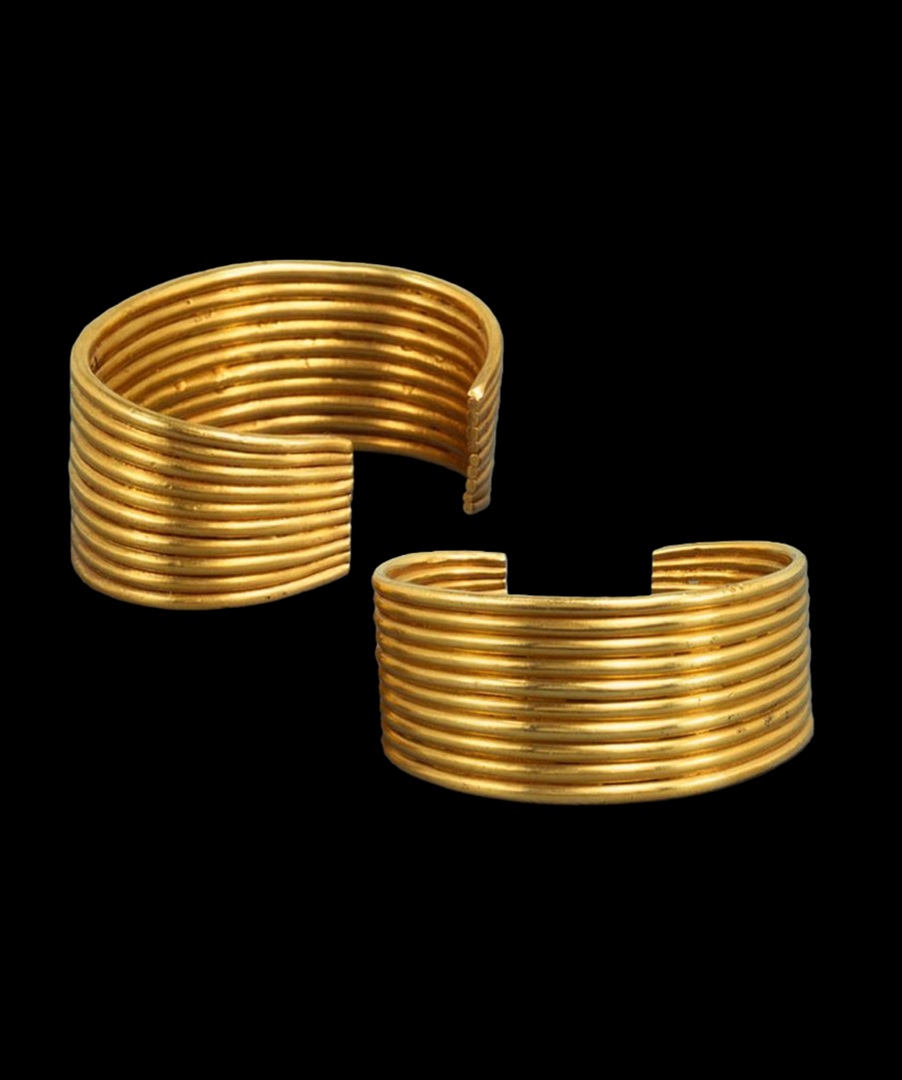
Several technological changes emerged in the Atlantic façade of the Iberian Peninsula during the Late Bronze Age. Goldwork gained new forms by joining hollow casted pieces. Two bracelets from the collection of the National Archaeological Museum in Lisbon, produced by joining 10 round sections solid casted thin rings, are the most representative gold items of a transition period when the ancient solid casting techniques are used simultaneously with the new techniques. No analytical study was carried out on the very rare objects representative of this transition period. In this work we present the first analytical results obtained for the two bracelets from the find of Herdade do Álamo (Moura, Beja, Portugal) using non-destructive quantitative elemental tecnhiques: portable XRF and µPIXE. Both bracelets were analysed in situ by portable XRF. The equipment comprises an Eclipse IV X-ray source with a Rh anode and a XR-100 SDD Amptek X-ray detector at 90º geometry. The identification of the joining technology requiring higher spatial resolution was carried out through µPIXE analysis using a 2 MeV proton beam focused down to 100x100 µm2 at the external microbeam setup of the IST/ITN van de Graff accelerator comprised of a OM150 quadrupole triplet system and a 30 mm2 Bruker SDD X-ray detector. The results indicate that the solid thin rings were produced with two different alloys with an Ag/Au ratio of 0.20 for 12 of the rings and 0.26 for the other 8 rings. The latter show the same composition as the two hollow gold neckrings from the same find, analysed by portable XRF. Micro-PIXE elemental distribution maps and point spectra analysis shows that the bracelets were soldered together using gold alloys with different melting points. Based on this data we could reveal the manufacture technologies employed and propose the first mounting scheme for the bracelets of the Herdade do Álamo find.